Help Wanted!
As we add several more Lutheran sources to our database to get a broader picture of post-Reformation use and to iron out a few questions of majority usage, we could use some people with capabilities in the late medieval/early modern versions of various languages, specifically the following:
Finnish
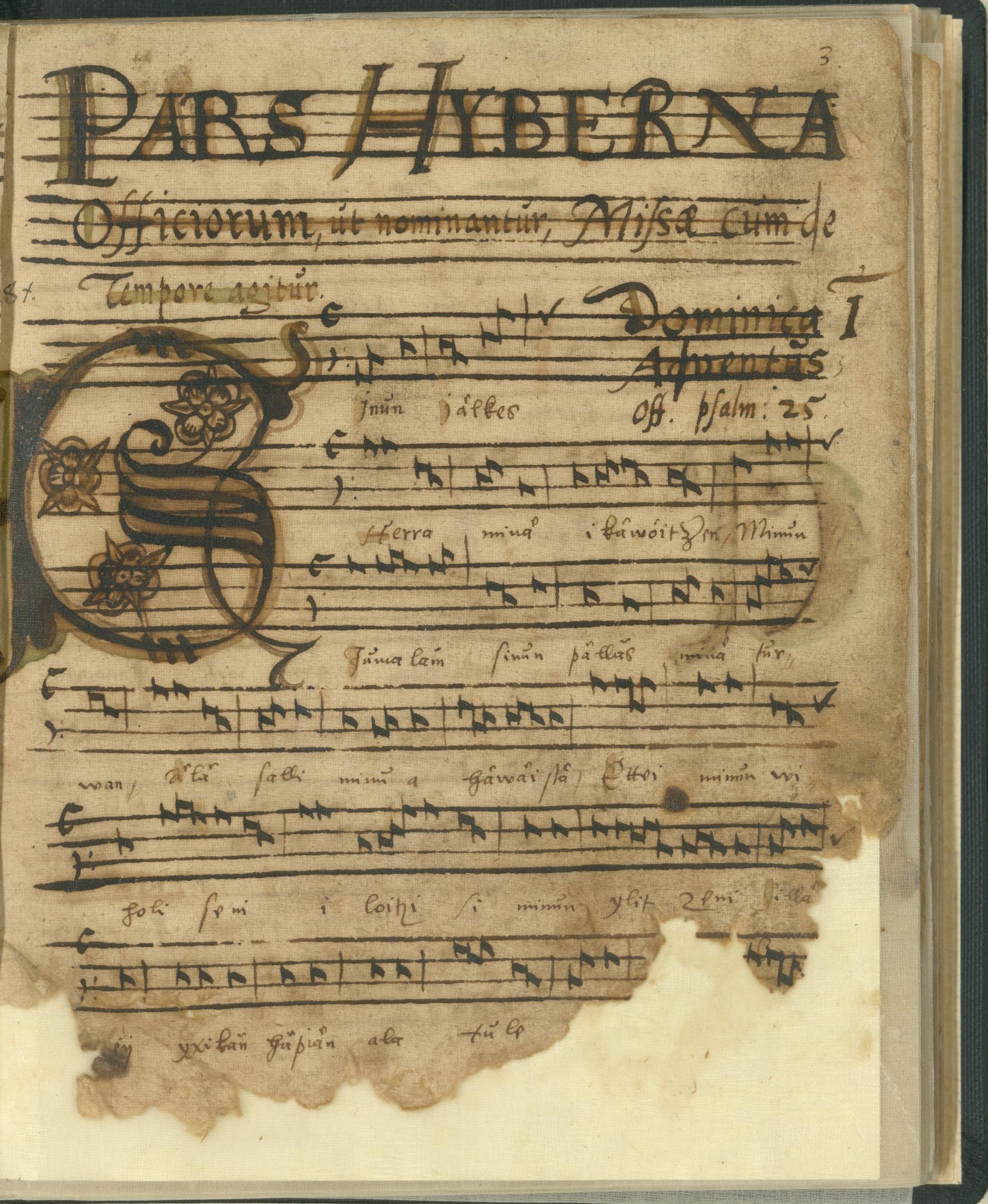
Hungarian
[Sorry, no image for this one. If you volunteer, you get to help track down the Graduale in question. Lucky you!]
Icelandic
If you have abilities in one (or more) of these languages and would be interested in helping us out, please get in touch via our contact form at the bottom of this page.
Discover more from The Lutheran Missal Blog
Subscribe to get the latest posts sent to your email.
Hello.
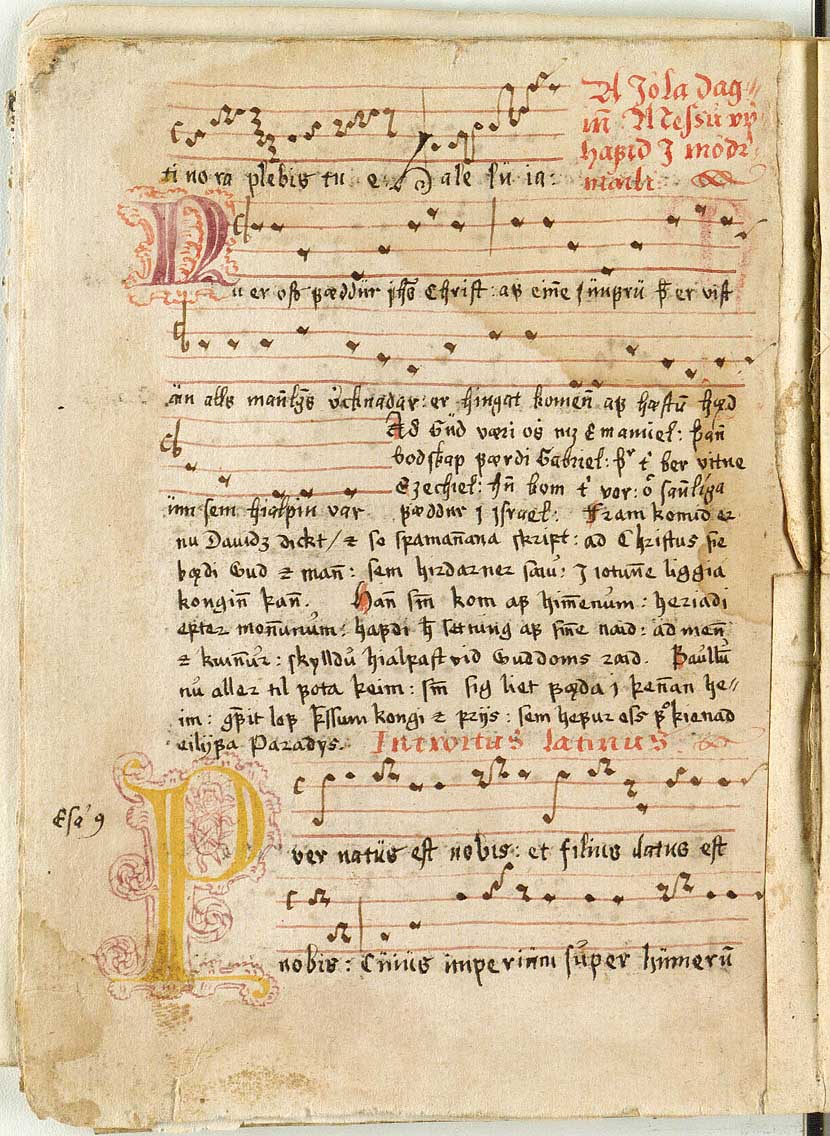
I am looking at the Icelandic page, comparing it to the original 1594 Lutheran Graduale. The red heading in the top right reads: “Á Jóladaginn. Messuupphaf í móðurmáli,” which translates to “On Christmas day. Beginning of Service in the vernacular.”
The page, beginning with the “N” drop cap, shows the opening hymn for the service, as well as the Latin introitus for the day. The page differs from the Graduale in a few ways. First, the words of the hymn are slightly different. Second, the Graduale has a
The 1594 graduale also contains an alternative hymn, which is omitted in the page above. This is the Luthers Christmas hymn: Heiðra skulum vér Herran Krist. You should know this hymn as We praise You, Jesus, at Your birth (LSB 382).
Now, this page is not much to go on, but it is clearly hand written, and perhaps a personal copy of some pastor, omitting what he did not need, and perhaps testing out this abilities to translate? Only a guess of course, but it would be interesting to see the rest of the manuscript.
Now, a little bit more about the hymn on the page. It is an Icelandic translation of a Danish hymn, apparently first published in 1553. The first stanza in Danish reads:
Nu er fød oss Jesus Christ
Aff en Jomfru, det er vist,
For uden Mandz Veblandelse
ER han voss kommen aff Høyeste
Vor Salighed.
The Icelandic translation found in the 1594 Graduale reads:
Frelsarenn er oss fæddur nu
Hans From Móðir var Jomfru
Af Manns vølldum ei visste su
I Heim til vor af Himynn for
su Heillen stor.
The translation in the page above is slightly more literal. It reads:
Nu er oss fæddur Ieso Christ,
af einni junfru, þ[að] er vist,
an alls mannlegs vaifnaðar*, (* I am unsure about this word)
her hingat komenn af hætu hæðum
sem hjálpin var.
More on the hymns here:
https://bragi.arnastofnun.is/ljod.php?ID=1555
https://bragi.arnastofnun.is/ljod.php?ID=1203
The 1594 Graduale can be found here, open to the correct page: https://baekur.is/bok/979f4501-26c9-4309-9b39-0006d4bca10f/0/40/Graduale#page/n39/mode/2up
Thanks for your reply.
The image in the post is a leaf from the gradual (c. 1580) compiled by Gísli Jónsson, Bishop of Skálholt 1558–1587, now held in the Royal Library of Denmark (http://www5.kb.dk/permalink/2006/manus/17/eng), which contains Latin chants for both mass and office as well as a number of Icelandic texts, including hymns, the Litany, Te Deum, and prayers.
In addition to this gradual, we are also interested in having someone take on the entry of the 1594 and 1607 editions of the Graduale (the latter edition containing a fuller array of mass propers), and the Antiphonarium Holense, c. 1580 (https://ismus.is/tonlist/baekur/1000012/). As a result, we hope to have both ancient dioceses represented, and a thirty or forty year span of time that moves from the earliest extant Lutheran liturgical texts to the standardization of Lutheran practice in the Þorláksson Graduale. The article “Drafting a New Lutheran Liturgy in Post-Reformation Iceland” in the book Celebrating Lutheran Music: Scholarly Perspectives at the Quincentenary from Uppsala University was exceptionally helpful in directing us toward these sources, and you can view it here (pp. 49ff.) : https://uu.diva-portal.org/smash/get/diva2:1367114/FULLTEXT01.pdf
If you are interested in helping us enter these sources in our database, we would be so very glad to have your assistance. Just send a message to us from the FAQ page linked in the post above.
wow!! 11The Nativity of the Blessed Virgin Mary
Did you ever get the Hungarian figured out? I have connections to a group of Hungarian speakers in the Detroit area.