“Old Liturgical Rubrics”
In my previous post concerning the ranking of the Vigil of Christmas above the Fourth Sunday of Advent, I stated that this was according to the “old liturgical rubrics”—a very scholarly citation, indeed.
These rubrics can be found in the following sources:
Breviarium pro dioecesi ecclesiae Augustensis, 1497 (folio a1:verso)
Directorium seu index divinorum officiorum secundum ritum ecclesiae et dioecesis Frisingensis, 1516 (folio 1:verso)
Index sive directorium horarum secundum ritum chori Curiensis dioecesis, 1520 (folio x6:verso)
The ranking of feasts in the late-medieval liturgical calendar was rather complex. Rather than trying to explain all the rules, some dioceses opted instead to publish a detailed sort of calendar, a directory, listing exactly what to do on every day of the year. This required 7 iterations for the season of Advent and 35 iterations for the rest of the Church Year, based on the possible dates of Septuagesima.
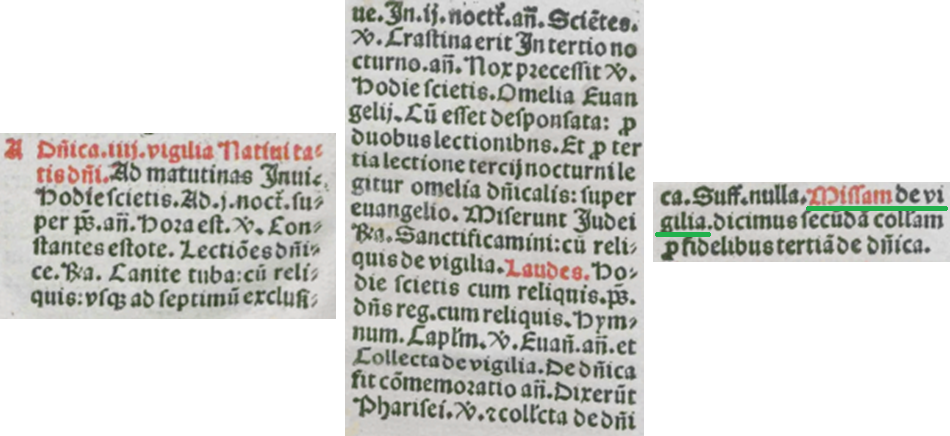
As an example, the following image from the Chur directory (Index Curiensis) gives the Propers for December 24th, when it falls on a Sunday. The directory is primarily concerned with the Daily Offices (Matins, Lauds, etc), nevertheless, it does prescribe the mass of the Vigil (Missam de vigilia) with an additional collect for the omitted Sunday mass. (Mr. Gaba, your instincts were correct!)
These directories could only have been prepared (much less studied today) by people with undiagnosed OCD. Case in point: There is actually a 36th possible date for Septuagesima, but it can only occur when Easter falls on the latest date possible (April 25th) during a Leap Year. This has never occurred since the adoption of the Gregorian calendar, yet most of the directories include the partial 36th Regula, which runs from Epiphany to Leap Day. When will it be used for the first time? In the year 3784! Yes, that’s right. The directories from the 1500s knew this day would come, and they planned accordingly. So when Septuagesima falls on the feast day of the Chair of St. Peter in Antioch for the first time in recorded human history (2,268 years after the publication of the Freising Directory), we will know exactly what to do. I can hardly wait!
The ranking of the Vigil of Christmas above Advent IV is further attested in Ritual Notes (11th edition) by E. C. R. Lamburn, p. 263, but this is not exactly an “old” liturgical rubric. (Lamburn is an Anglican source and not entirely trustworthy for our purposes, though a number of the Gottesdienst editors consult him regularly.)
Discover more from The Lutheran Missal Blog
Subscribe to get the latest posts sent to your email.
One Comment