NKJV Lections / KJV Psalmody
The editorial team for The Lutheran Missal has been primarily focused on the Psalmody (Introits, Graduals, Alleluias, etc.) for the better part of a year. Even though the word count of the Psalmody is much less than that of the Lections (readings), the Psalmody requires more editorial attention, for reasons I’ll explain in later posts.
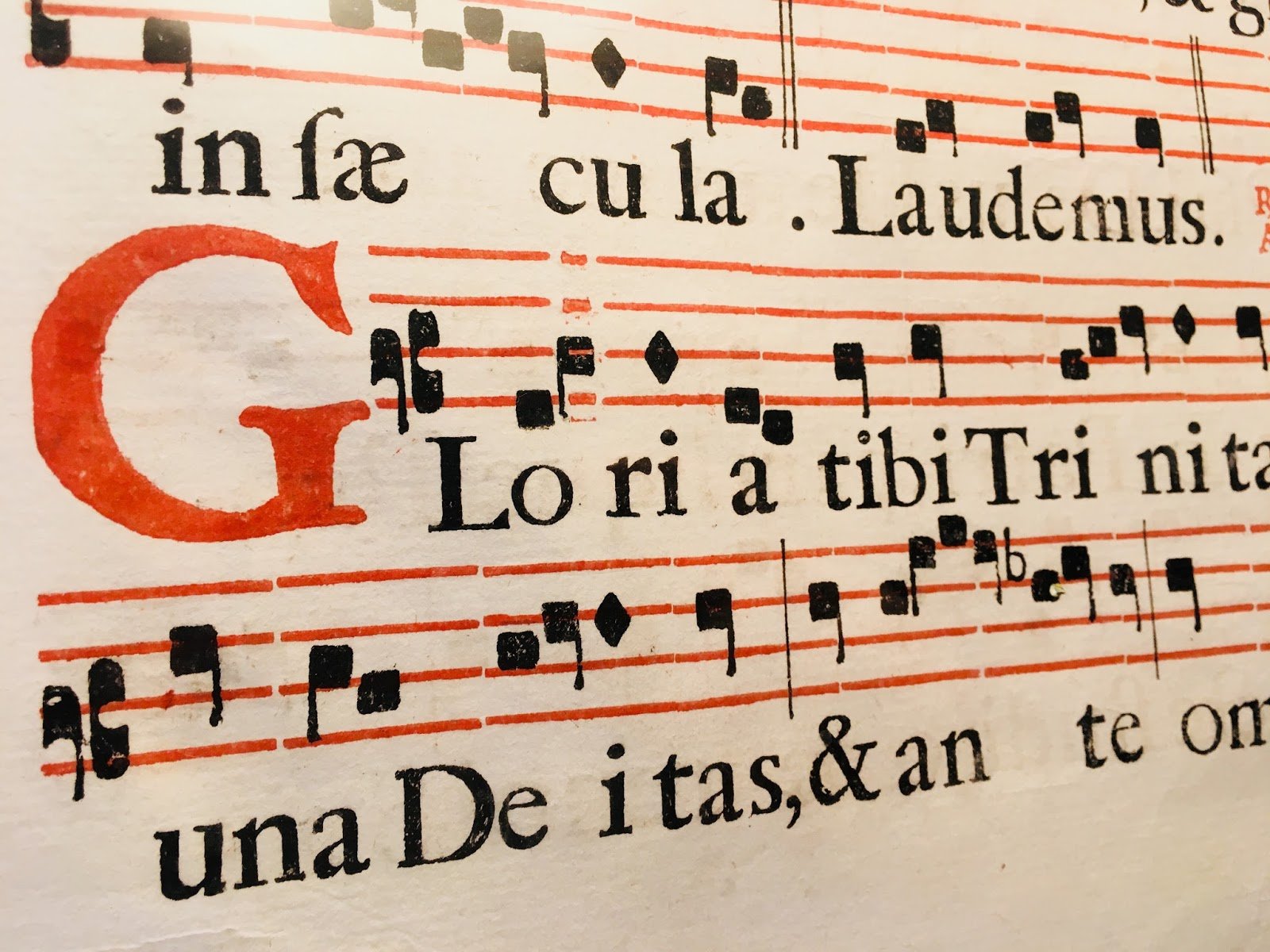
After much deliberation, we concluded last summer that the KJV psalter will serve as the base text for our Psalmody. This means that The Lutheran Missal will primarily use two texts: NKJV for the Major Propers (Lections), and KJV—or KJV-style language—for the Minor Propers (Psalmody and Collects). Surprisingly, perhaps, the use of two styles of language in the liturgy, one common and the other more archaic, has been the custom of the Western Church for most of her history. In 382 AD, Pope Damasus I commissioned Jerome to prepare a revision of the old Vetus Latina texts. Jerome’s Vulgate (same root word as vulgar, meaning: common or colloquial) quickly became the standard text of Western Christendom. However, the more archaic Vetus Latina was generally retained in the Psalmody of the Church’s liturgy—even a millennium or more after the introduction of the Vulgate. It would seem that once a text has been paired with music, it is extremely difficult to rewrite the corporate memory of the Church. Thus, one will find the Vulgate and the Vetus Latina side-by-side in all the late-medieval missals.
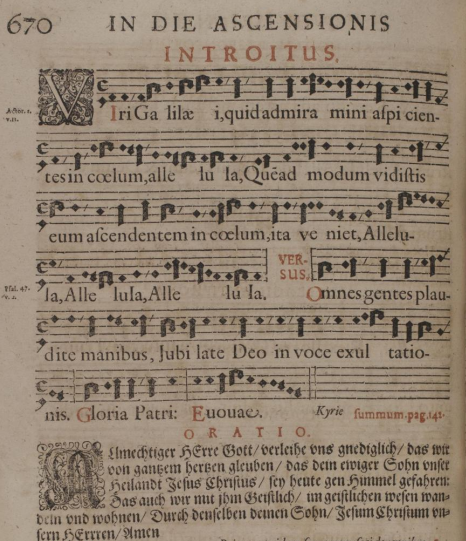
This tradition of two texts in the liturgy, colloquial and archaic, continued for some time among the churches of Augsburg Confession—in fact, in even more pronounced fashion. Lutheran worship in many places following the Reformation consisted of a hybrid of German and Latin. For example, in the Lutheran cathedral of Magdeburg, nearly one hundred years after the Reformation began, the Vetus Latina was still in use for the Introits, Graduals, and Alleluias. Other portions of the liturgy, such as the Ordinaries (Kyrie, Sanctus, Agnus Dei, etc.) and many of the collects were also still in Latin.
Another example, this time within the Church of England, can illustrate the same point. When the first edition of the Book of Common Prayer was published in 1549, it used Myles Coverdale’s Great Bible as the basis for its Biblical texts. When, after some turmoil, the King James Bible was published in 1611, the 1662 Book of Common Prayer changed the text of the Epistles and Gospels to correspond with the KJV, but the text of the psalter was still that of Coverdale, and this side-by-side usage of the Coverdale psalter and KJV lections continued well into the twentieth century among English-speaking portions of the Anglican Communion.
Perhaps all of these things occurred only as accidents of history. Even so, we consider that a tradition has emerged that is worth preserving. Chanting is an elevated form of speech. It seems fitting, therefore, that the chanted portions of the Divine Service would employ an elevated form of language. And since the older and more elegant language of the KJV Psalter (via TLH, the “old red hymnal”) is still very much alive within the collective memory of our synod, we believe it is a fitting choice for the Psalmody of The Lutheran Missal.
Discover more from The Lutheran Missal Blog
Subscribe to get the latest posts sent to your email.
This is most welcome news, and I wholeheartedly agree with the decision. Not only for the worthy reasons you list, which are helpful in themselves, but also because of the unsurpassed beauty of the KJV. I recall having read somewhere that the KJV translators were acutely aware of the need to preserve or mimic as best they were able the beauty embedded the Hebrew poetry when translating into English. As no other English translation can boast, the KJV preserves the importance and necessity of poetic lilt and beauty. Kudos.