Phase 2 Complete
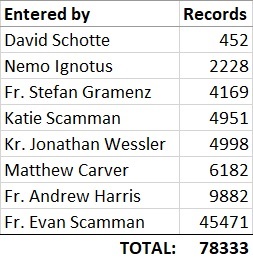
Today marks the completion of a major phase in our research for The Lutheran Missal. After eight months of fruitful labor, we have finished cataloging the incipits for all the sanctoral calendars (thirty-eight sources). This was a massive collaborative effort between many volunteers who worked tirelessly to enter over 78,000 records into our database.
It is fitting on this day, the Eve of Septuagesima, to name the workers from last to first:
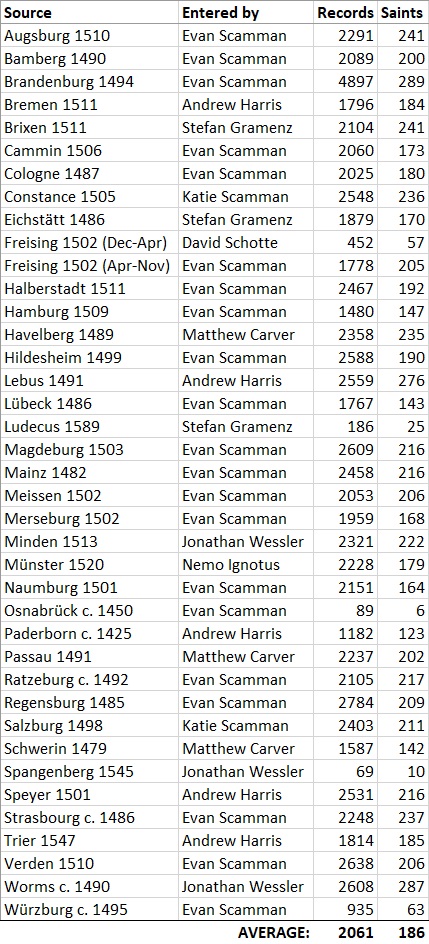
The breakdown by source is as follows:
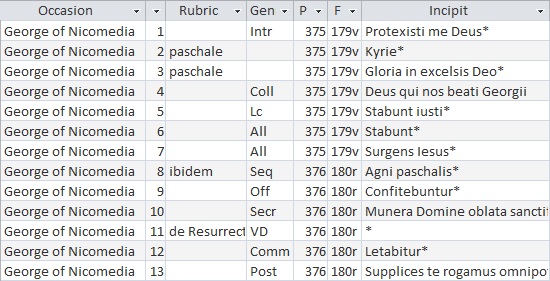
Perhaps you’re impressed by the numbers but aren’t certain of what they mean. Allow me to explain. Below is a sample of our work: the incipits (first few Latin words) for each element of the mass for St. George from the Freising 1502 missal.
Now that every sanctoral mass has been cataloged, we can determine which introit should be used in The Lutheran Missal for St. George:
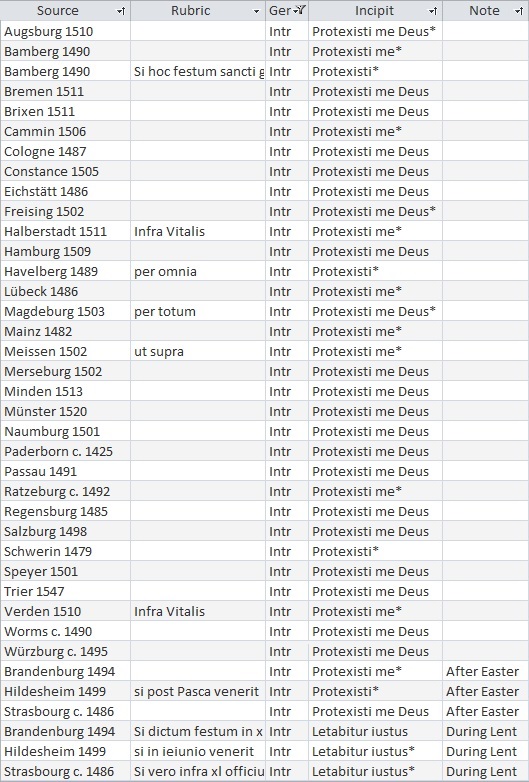
It is clear that Protexisti me Deus (Psalm 64:2) is the historic introit for St. George during Eastertide. (The final three entries provide a different introit to be used during Lent.)
St. George was widely commemorated, appearing in nearly every missal, and so the sources are unanimously agreed, as they tend to be for the “major” saints. But this is not always the case. For example, while the majority consensus for the introit for St. Bernard of Clairvaux is In medio ecclesiae, there is also strong support for Os iusti.
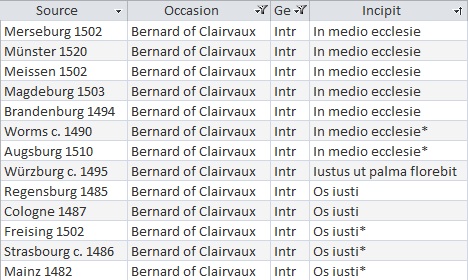
Now that we have this data at our fingertips, we will be able to make informed decisions when we begin the editing and compiling process. But first, we must finish the final phase of data entry: the Common and Votive masses. More than a dozen volunteers are already hard at work on this, and, of course, we will happily welcome more laborers into the vineyard.
Discover more from The Lutheran Missal Blog
Subscribe to get the latest posts sent to your email.
This is awesome. Thanks Evan!
On Sat, Feb 8, 2020, 8:43 PM The Lutheran Missal wrote:
> Evan Scamman posted: ” Today marks the completion of a major phase in our > research for The Lutheran Missal. After eight months of fruitful labor, we > have finished cataloging the incipits for all the sanctoral calendars > (thirty-eight sources). This was a massive collaborative e” >
Great work!!
Wonderful! Keep up the good work.
Great work cant wait to see a copy. Long overdue