Tradition: Accidental or Intentional?
Every church has it own unique traditions. For example, in one of the churches that I pastor, the Slovak families eat a special flat wafer called “holy bread” during the Christmas dinner. No one seems to know how this tradition got started.
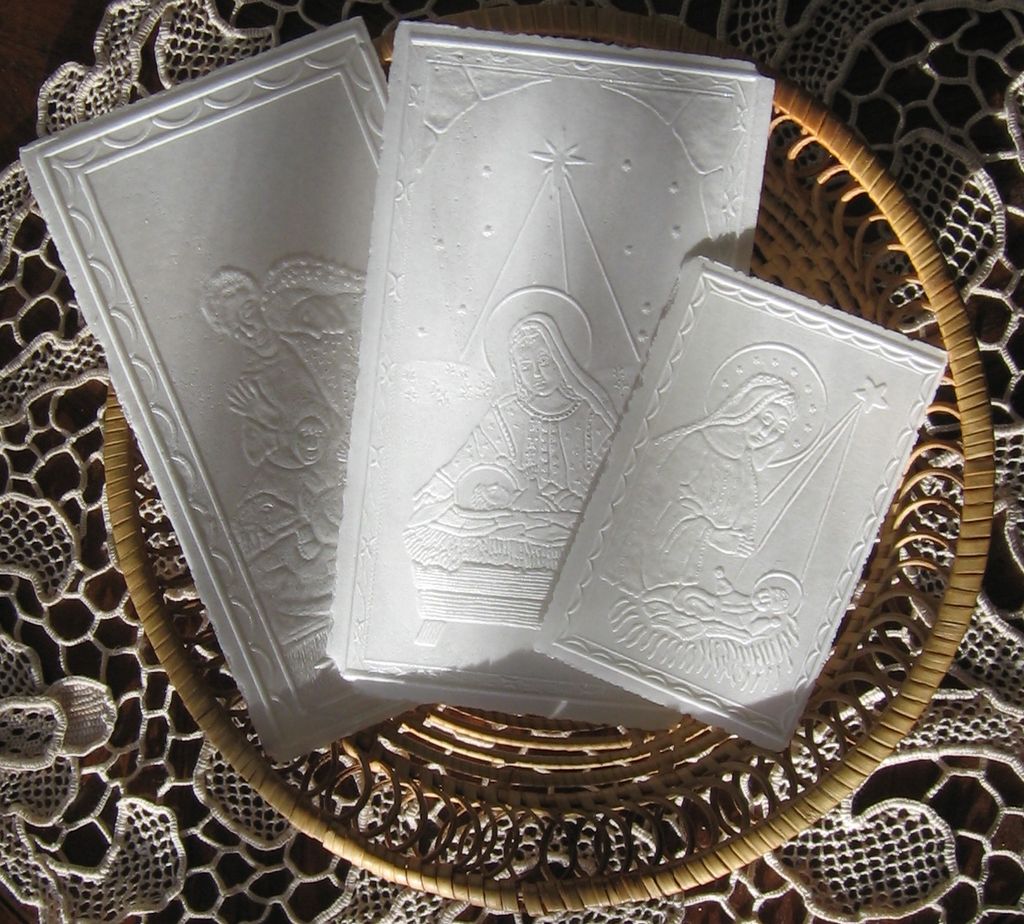
Some traditions arise purely by chance of the times. If you’ve visited Amish country, you may have noticed that nearly every house has the same blue curtains. It’s part of the Amish tradition. Why? A local explained to me that at one time blue was the cheapest fabric in the mail-order catalog. Now it is a deeply rooted tradition.
Perhaps I assumed that most of the local variations in the historic lectionary developed in a similar way, as the byproduct of random events. Maybe a priest from Italy came to a German town bringing his own missal with him. Then, centuries later, liturgical scholars would puzzle over the Italian influence found in a town far north of the Alps.
Without doubt, this sort of thing must have happened. But the Verden Promptuarium has taught me that the “editors”, so to speak, of the historic lectionary were much more intentional about their choices than I had supposed.
The diocese of Verden chose to use the missal of neighboring Halberstadt. Certainly, this decision would have saved the diocese a lot of money and effort. But if this were the guiding principle behind their choice, they would have simply set this missal on their altars and left it alone. They did not. Certain changes had to be made. For example, Halberstadt followed a minority tradition that switched the sequence hymns for the masses of Christmas Midnight and Christmas Dawn. This would not do. The Verden Promptuarium, which is twelve small-print pages of changes to the Halberstadt Missal, directs that the sequence hymns be returned to the more standard order.
In this manner, the Verden Promptuariam gives 847 changes that must be made to the Halberstadt Missal. This means that 847 times, where it would have been simpler to use the existing missal, already bound and printed, the good people of Verden chose the harder way. “Of course, Vos estis sal terre cannot be the Gospel for St. Matthias. That will never do. It must be Misit Deus!”

Keep in mind that every change made life more difficult for the parish priests of Verden, who would need either to juggle two resources at the altar or to rely on hand-written marginal notes.
It can be hard to celebrate the historic liturgy faithfully and reverently. It can take a lot of work to uncover and then follow the traditional worship practices of the Church. Yet, our Verden fathers thought it was worth the trouble and extra effort. They did not take the easy way. Nor should we.
Discover more from The Lutheran Missal Blog
Subscribe to get the latest posts sent to your email.
I like and follow your site, thanks