Medieval Manuscripts
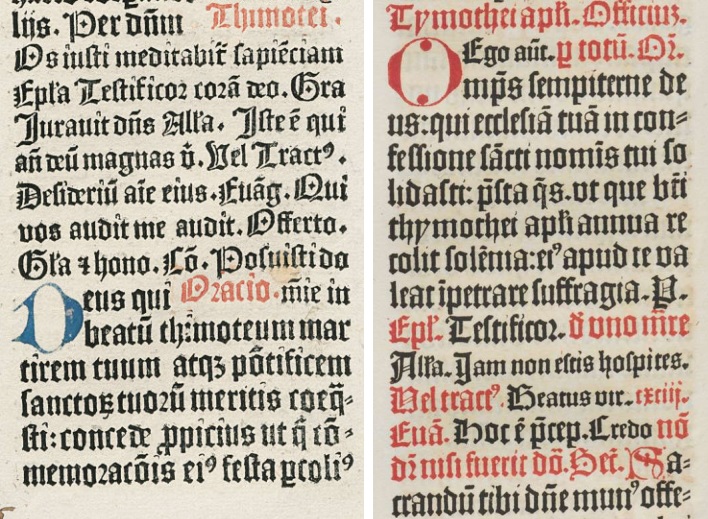
The missals of the late 15th and early 16th centuries present several difficulties to the curious but otherwise typical 21st-century reader. First, they are written in Latin, a language with no native speakers. Second, printing technology was still in its infancy, making the early manuscripts with their Gothic script and lack of white space difficult for untrained eyes to read. In this regard, the rapid advancement in printing technique between 1490 and 1500 is somewhat akin to that of computer technology between 1990 and 2000. The difference in readability between the two missals shown below (both from the diocese of Passau) is significant, though they were printed only nine years apart.
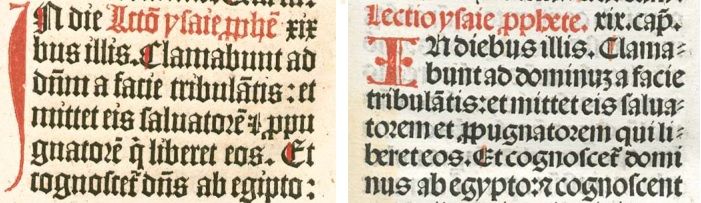
Third, and perhaps most challenging of all, is the undocumented and somewhat inconsistent use of abbreviations throughout the manuscripts. None of the missals I have examined provides any sort of key or abbreviation chart. Prior knowledge of the system, and especially the liturgical texts, is simply assumed. As an example, consider the Gospel reading for St. Agnes:
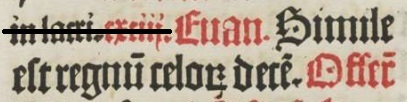
The entry reads: Evangelium: Simile est regnum caelorum decem [virginibus]. Note the moderate use of abbreviation. But this text, the Parable of the Ten Virgins, is a common Gospel text—so common, in fact, that it is often severely abbreviated as follows:

The entry above would be impossible to decipher without an existing familiarity with both the common liturgical texts and the abbreviation scheme. (It would also help to have some Latin.) Since I initially possessed none of these skills, I relied on the expert tutelage of Matthew Carver, who answered hundreds of questions with the patience of a parent teaching a child first to crawl and then to walk. It is surprising how quickly one can become at home in these texts—the other members of our team would likewise attest to this. It is like learning to speak a new language, after which, a once difficult task becomes second nature.
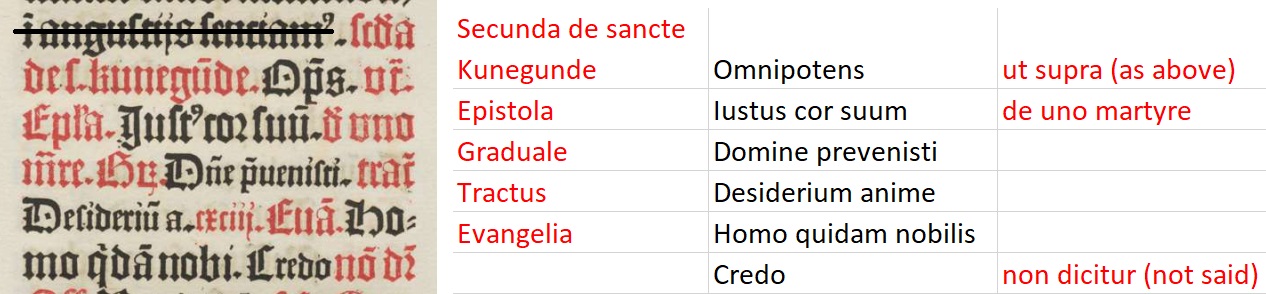
The following is a typically abbreviated portion of a mass with its accompanying transcription:
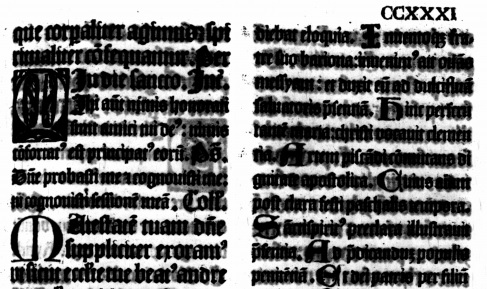
Six of our sources were scanned in black and white, which unfortunately presents the rubrics in black. These are a challenge to transcribe, particularly when a scanning error has blurred some of the pages (see below). But even these obscure sections can be deciphered by cross-referencing them with the other sources.
Examining each new missal is like meeting another member of an extended family. One recognizes certain familial traits and yet also finds peculiar idiosyncrasies. Some missals abbreviate to the extreme, while others repeat the same verbose rubrics in full ad infinitum. One missal in particular (Havelberg 1489, pictured below on the left) appears to have been typeset by a unqualified or perhaps lazy apprentice. Find the Epistle reading, Testificor, in both readings, and you will appreciate the difference.
Still others—most notably Salzburg 1494, which was produced entirely by hand—are works of art without parallel in our era of industrialized mass production.
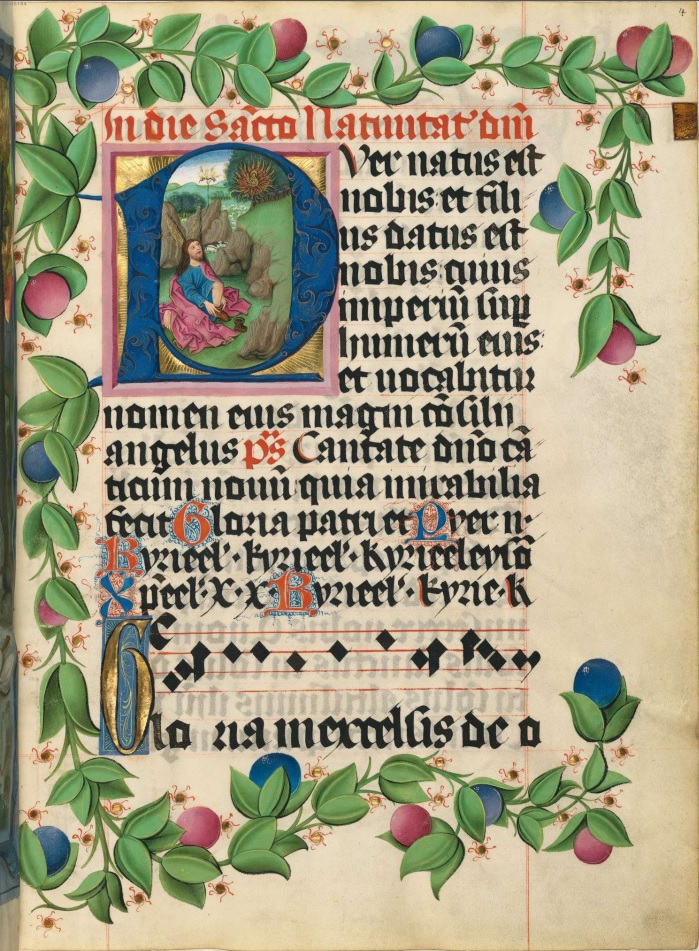
The Salzburg Missal contains many partially illustrated pages, suggesting that just as the task of preaching is never complete until our Lord’s return, so the adornment of the sacred text is intended to continue from one generation to the next. It is our hope that The Lutheran Missal will be a fitting successor to these august yet peculiar tomes of Western tradition and, more importantly, a fitting receptacle for the message they contain.
Discover more from The Lutheran Missal Blog
Subscribe to get the latest posts sent to your email.