German Diocese Map
For the last several months, we’ve been busy cataloging the incipits for the German missals from 1475-1550. The map below is our historical reconstruction of the diocese boundaries from that time period.
We didn’t originally set out to include every German diocese in our pool of sources. But after putting this map together, we realized that only four dioceses were missing (pictured above in yellow). These four merited a second look:
1) Lebus was a Polish diocese for much of its history. However, at the time of the Reformation, the region was governed by the margraves of Brandenburg. In addition, the people of Lebus embraced the Reformation. We have added the Lebus Missal (c. 1491) to our list.
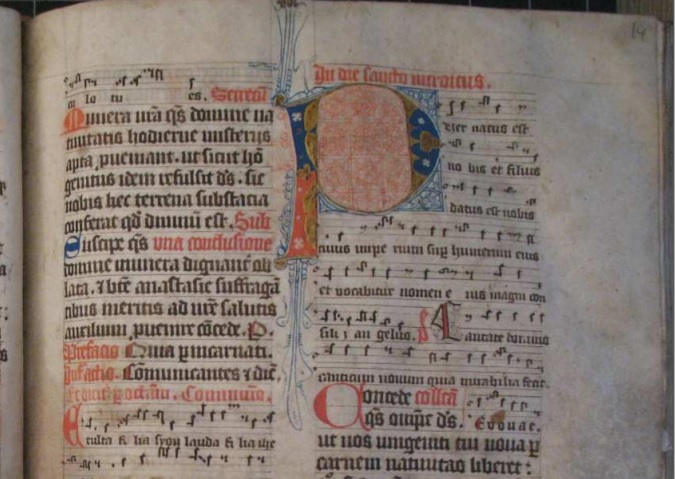
2) The only surviving missal from Paderborn was published sometime between 1400 and 1425. Though this predates our time period of interest by at least 50 years, the missal is worth including in order to represent the diocese. It is the only one of our sources that is handwritten. It is also our only noted missal (A noted missal includes musical notation for the Introits, Graduals, and other verses. Most missals do not).
3) The Verden Promptuarium from 1510 is only 12 pages and contains a random assortment of propers for various occasions. Clearly, it was not meant to stand alone, as it includes folio references to a much larger but unspecified volume. But the diocese of Verden has no known extant missal. When Dr. Földváry suggested that the Promptuarium may have been used in concert with the missal of a neighboring diocese, I began comparing its folio references with any of the surrounding missals that would have existed in 1510. Unfortunately, none of them lined up.
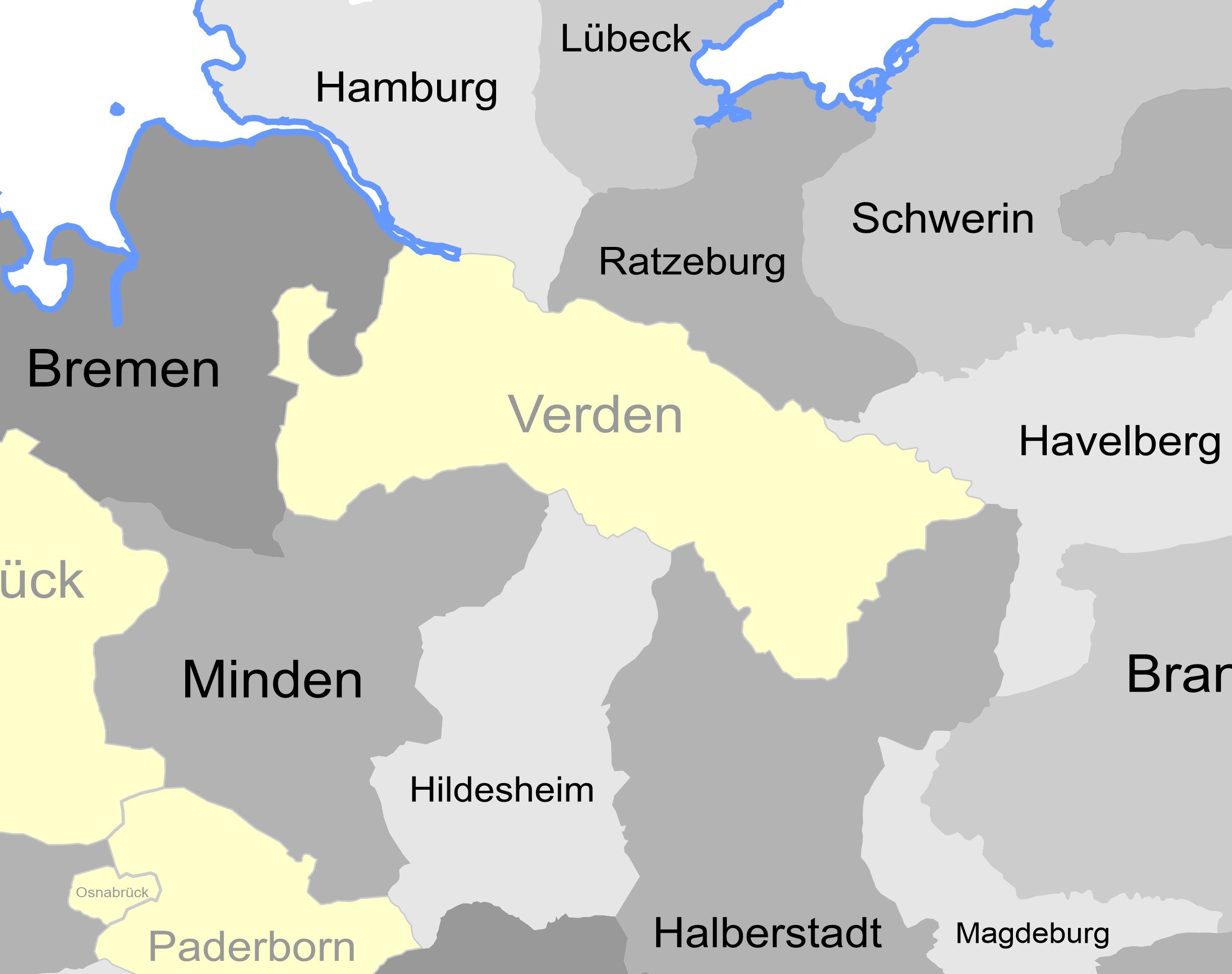
On a whim I tried Halberstadt 1511. “Surely, the supplement could not refer to a book not yet published?” I was pleasantly surprised—Verden 1510 matched Halberstadt 1511 perfectly! (I suspect that the two dioceses collaborated during the editing of the volumes, but Verden, being only 12 pages, made it to the printer a calendar year before Halberstadt.)
The following example shows how the two manuscripts function together. Verden (left) gives the mass for the Octave of St. Andrew, making reference to his Vigil as found on folio CXXXIII of Halberstadt (right). Without Halberstadt, the promptuarium would be virtually useless.
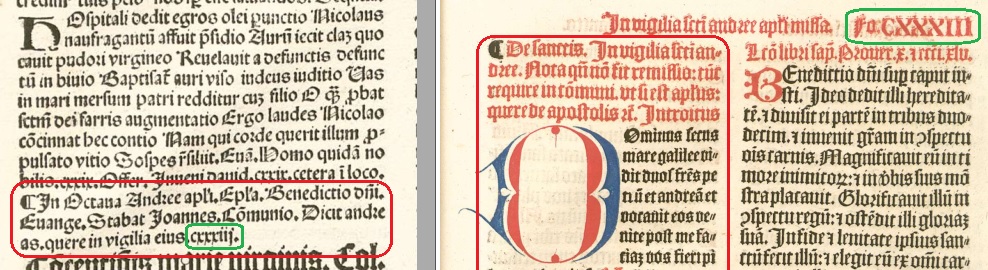
Based on our discovery, we can use the Verden Promptuarium and the Halberstadt Missal to digitally recreate the incipits for the “Verden Missal” in one volume (perhaps for the first time), which can then be treated as one of our sources.
4) The final diocese yet to be included is Osnabrück. There is an extant missal in the Osnabrück Archive in Germany, however, it has not been digitized. I have spoken with the archivist in hopes that we can arrange to have the manuscript scanned. If so, The Lutheran Missal will be based, without exception, on the historic practice of every diocese of pre-Reformation Germany.
Discover more from The Lutheran Missal Blog
Subscribe to get the latest posts sent to your email.