Phase 1 Complete

The first phase of our research is complete with the incorporation of all thirty-four temporal calendars into the missal database. The bulk of the 58,000+ records was previously cataloged by the Usuarium team from Hungary, saving us roughly six months of intensive effort.
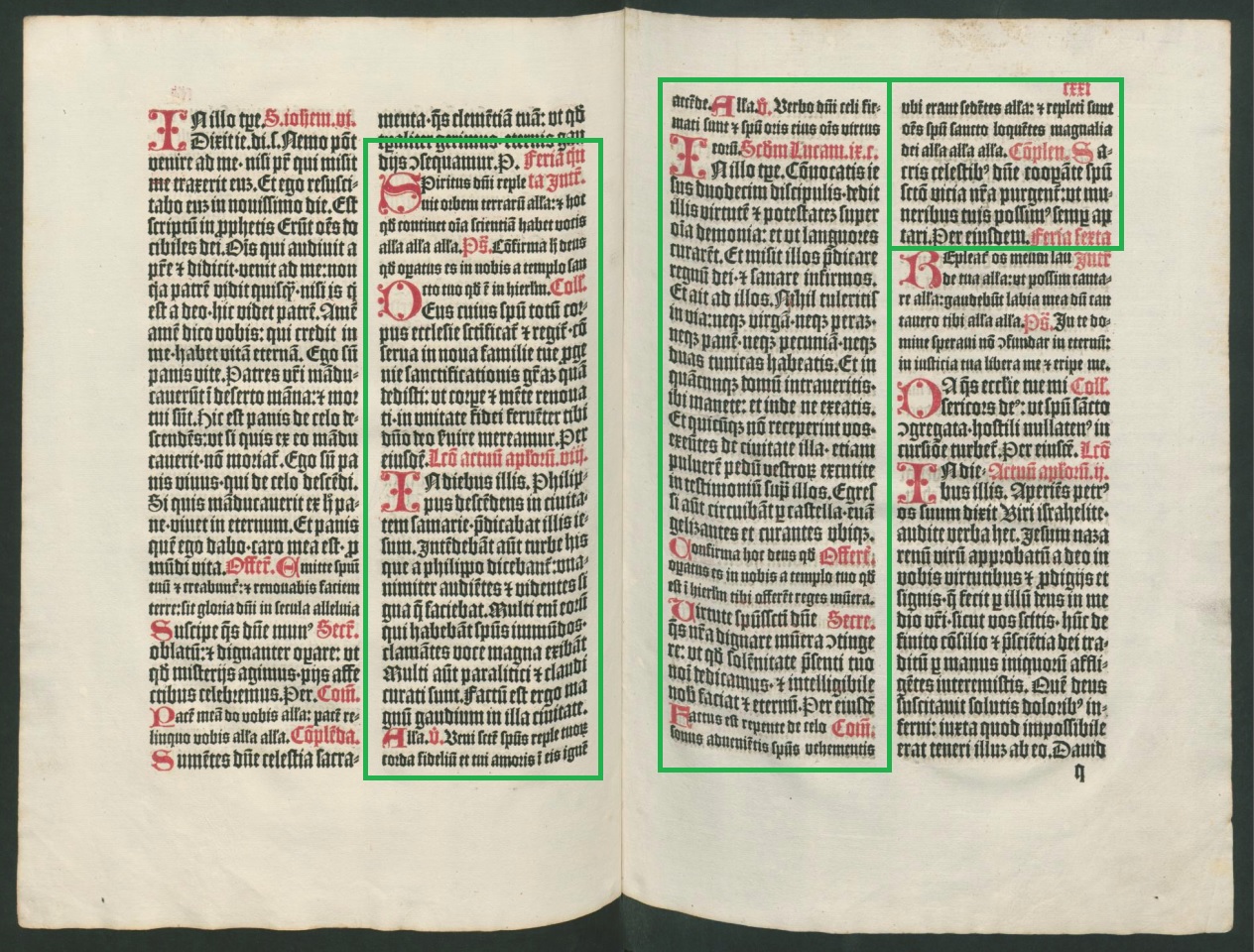
Brandenburg 1494: Thursday of Pentecost

Allow me to explain what this means. The image above from the Brandenburg Missal highlights the mass for Thursday of Pentecost. The first Latin words (incipit) of each element have been recorded as shown below:
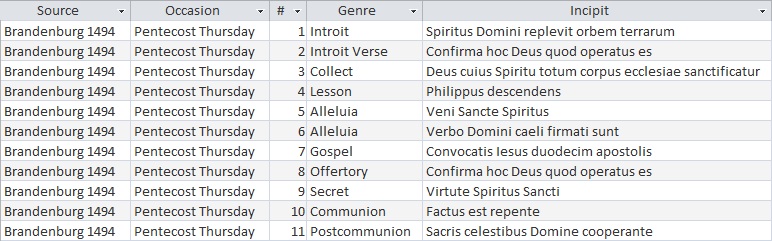
Now that the temporal calendars have been cataloged in this way, we can put the data to work. The following table shows just the Alleluia verse for this occasion:
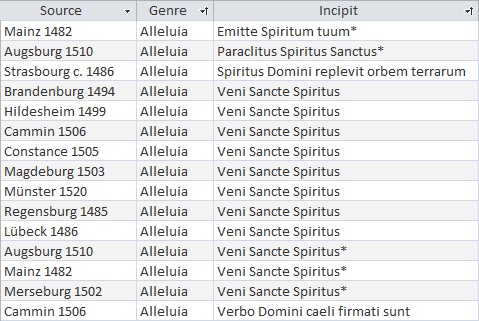
When Veni Sancte Spiritus appears in The Lutheran Missal as the Alleluia for Thursday after Pentecost (in English form, of course), this choice will reflect the consensus of Western tradition as contained in the missals of pre-Reformation Germany.

With the completion of the temporal calendars (Phase 1), we can begin work on the larger sanctoral calendars (Phase 2). Unfortunately, we have caught up to the Usuarium team. This time, volunteers for The Lutheran Missal project will undertake the massive data-entry task, sharing our completed work with Usuarium.


Discover more from The Lutheran Missal Blog

Subscribe to get the latest posts sent to your email.

Similar Posts

  • Dominica Palmarum

    As the perennials emerge from the ground around this time each year, so too questions concerning the reading of the St. Matthew Passion on Palm Sunday. Should the entire Passion be read or only Matthew’s account of the Triumphal Entry? Does the lengthy Passion reading infringe on the theme of Palm Sunday? Was the Passion…

  • Software Design

    The first Sanctorale (Augsburg 1510) was entered into Excel as a simple spreadsheet containing 2,279 records. But when I began work on Bamberg 1490, it was immediately clear that we needed more than a spreadsheet to handle the data. With each new entry, I found myself scrolling up to reference existing records. “What is the…

  • Too Many Options

    Americans love options, and that’s not always a good thing. With regard to the lectionary, I find a slew of optional readings to be less than helpful. One of the chief benefits of using the Historic Lectionary is catechetical, derived from the yearly repetition of a core body of texts. This benefit is diluted by…

  • Gottesdienst Podcast

    If you are reading this in 2019, it’s likely that you just listened to my chat with Fr. Jason Braaten on the Gottesdienst Podcast. I was honored to be asked to talk about our work on The Lutheran Missal. You’re here because you’d like to know more about this project. Super! We hope you’ll read…

Leave a Reply

Your email address will not be published. Required fields are marked *